
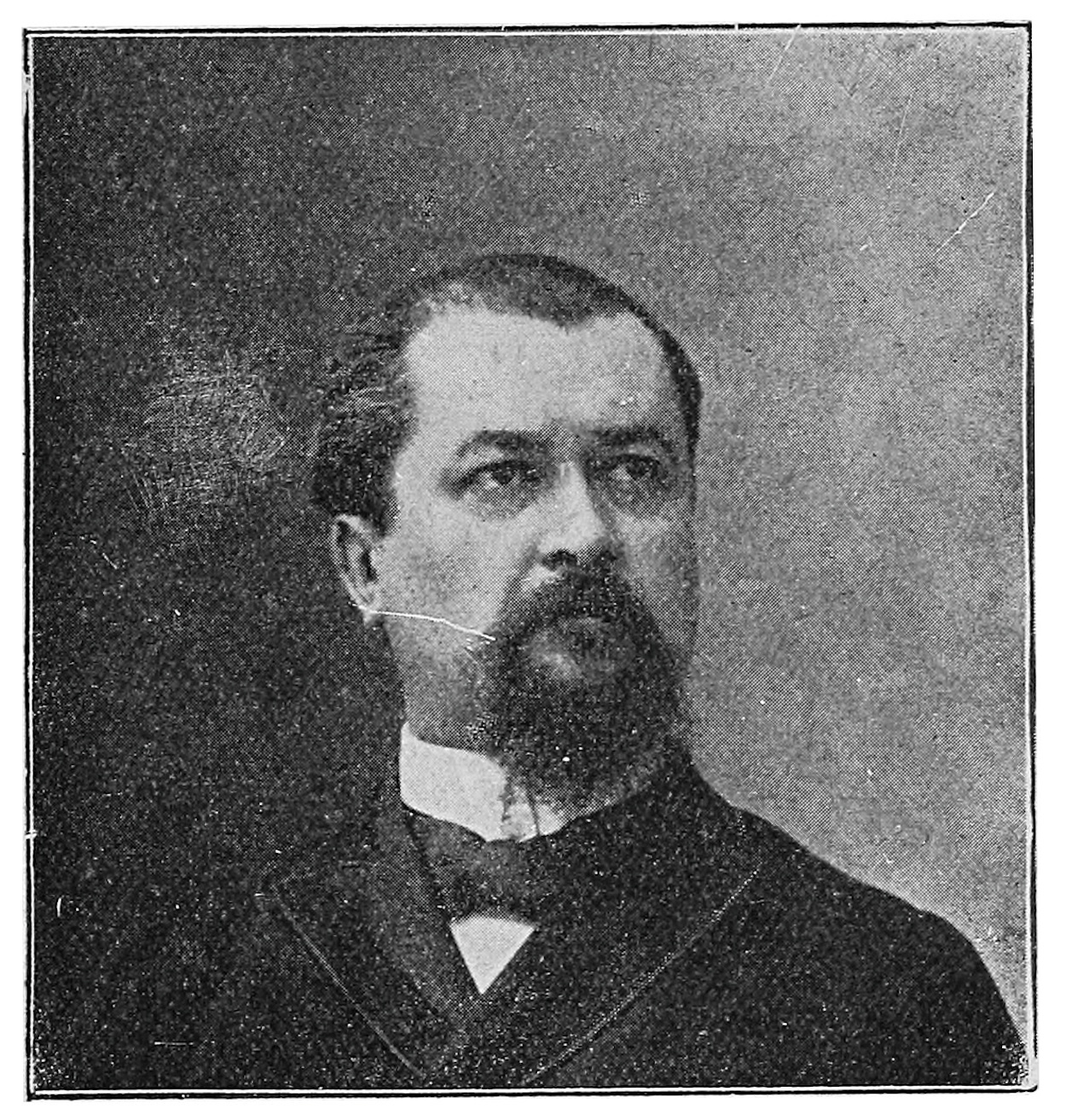
 Hippolyte Baraduc
To celebrate today's World Photography Day, we take a closer look at one of the extraordinary and exciting chapters in the history of photography—Hippolyte Baraduc's attempts to capture the invisible.
Published in 1896, The Human Soul: Its Movements, Its Lights, and the Iconography of the Fluidic Invisible presents the unique theories of French physician Hippolyte Baraduc, who believed that living beings were permeated by an invisible cosmic force he called the "Odic liquid." According to Baraduc, this vital energy existed within an all-encompassing medium he named Somod and could be made visible through a photographic process he termed iconography.
Rejecting conventional photography, Baraduc claimed that specially prepared photographic plates could record the invisible emanations of thoughts, emotions, and the human soul. Often dispensing with a camera lens altogether, he placed plates directly against the body—sometimes even the forehead—believing they could register an individual's "inner light" through electro-vital currents rather than reflected sunlight. The resulting images, which he interpreted as visual evidence of psychic and spiritual forces, include abstract forms, halos, luminous webs, handprints, and radiating patterns that he identified as manifestations of prayer, grief, thought, or the soul itself.
Today, Baraduc's theories are regarded as pseudoscientific, and his photographic claims have long been discredited. Yet his work occupies a fascinating place at the intersection of photography, medicine, psychology, and occult belief at the turn of the 20th century. A respected physician who worked alongside neurologists at the Salpêtrière hospital, Baraduc conducted his experiments during a period when the boundaries between scientific inquiry and spiritual speculation remained remarkably fluid.
P.S. Another supernatural phenomenon born out of the Victorian fascination with photography was spirit photography, which purported to capture the ghosts of the dead alongside the living.
P.P.S. Art history is full of surprising ideas, forgotten theories, and extraordinary experiments. Our free course, How to Look at Art, will teach you how to approach works like this with curiosity, understand their historical context, and appreciate why they continue to fascinate us today.