
 Gustav Klimt
Were you waiting for our 2027 Monthly Calendar? The painting we're sharing today is featured in it! Check it out in the DailyArt Shop!
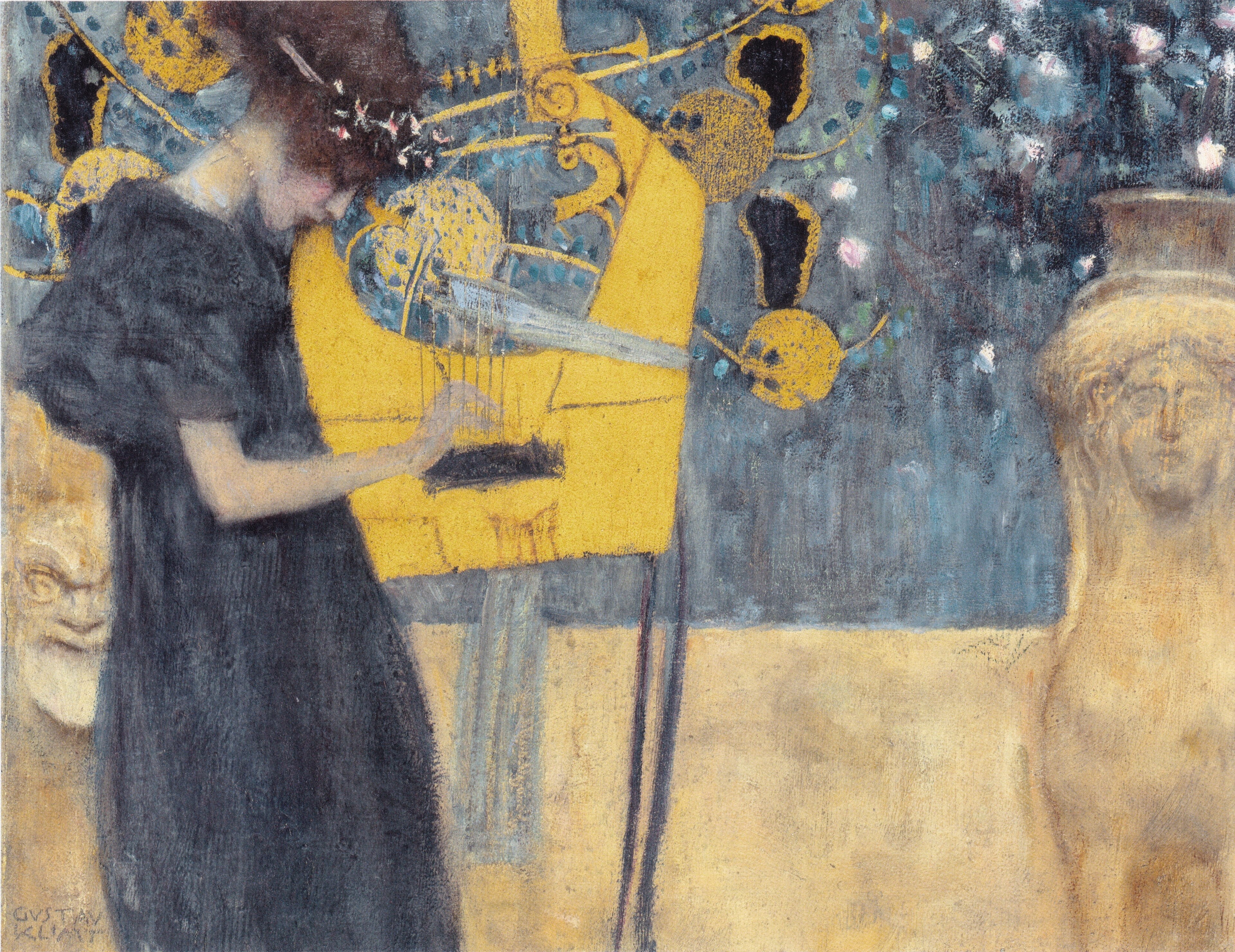
This beautiful painting by Gustav Klimt draws on iconographic models from ancient vase painting, most notably the austere form of the kithara and the vine branches, hung with grapes and round bundles that have been read as sacrificial cakes from the cult of Dionysus. In the spirit of Greek antiquity, the kithara and vines come to embody the Apollonian and Dionysian, forming a broader allegory of music itself—personified here by the beautiful young girl, lost in thought, almost transported by the sounds she draws from her instrument. The grotesque, mask-like face of Pan in the background seems to gesture toward music's ecstatic, Dionysian side, while the sphinx-like figure to the right hints at its more ambivalent, rationally elusive nature.
Painted by Gustav Klimt in 1895, the work predates the gilded ornamentation of his later "Golden Phase" and instead reflects his early engagement with classical antiquity and Symbolist allegory. The painting has its own eventful history, too: it was looted by the Nazis in 1938 and only resurfaced decades later, placing it among the many Klimt works caught up in the broader story of Nazi-era art restitution.
P.S. How well do you know the master of Secession? Take our Gustav Klimt Quiz and find out!