
 Caspar David Friedrich
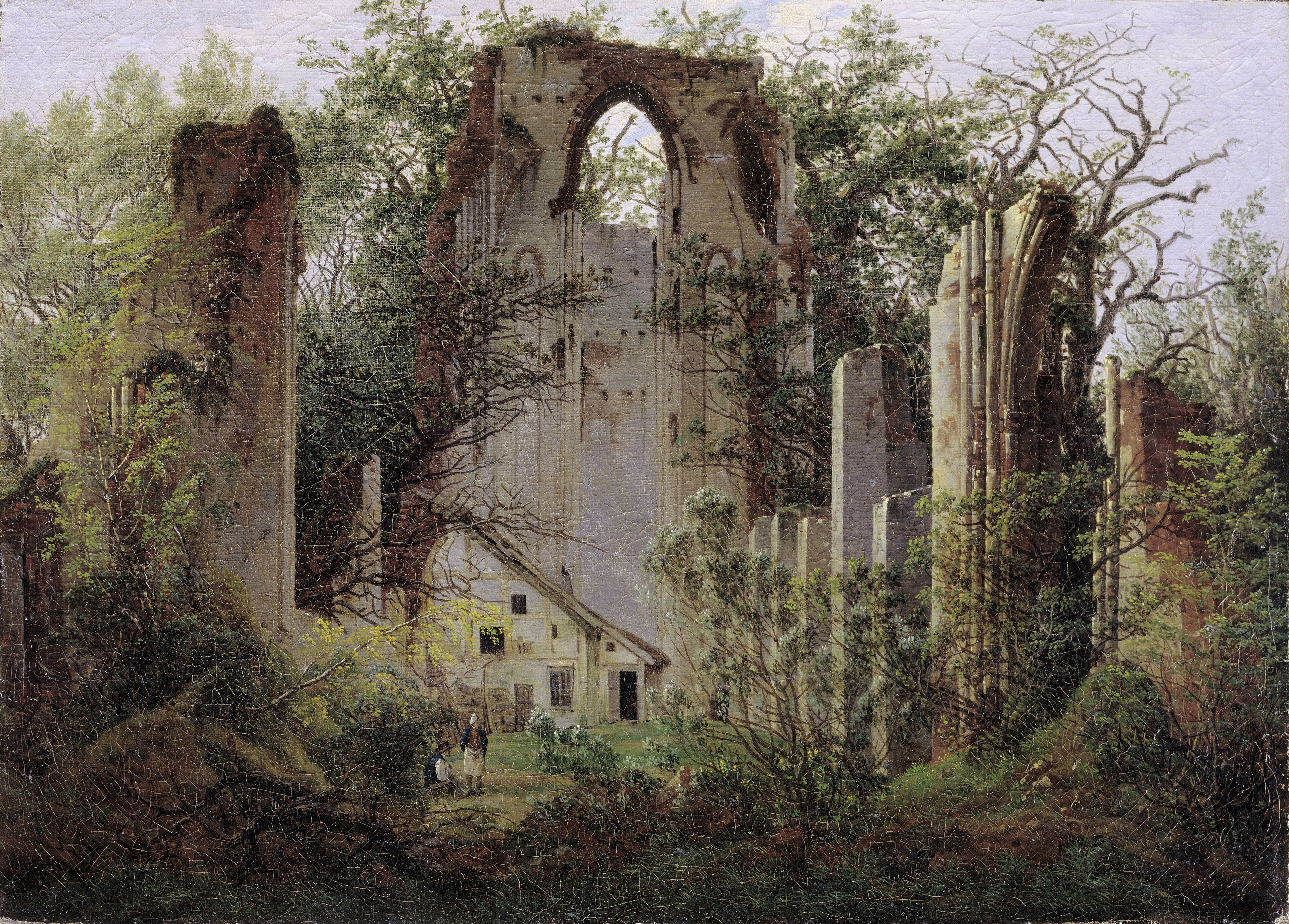
The ruins of the Cistercian monastery of Eldena, near Caspar David Friedrich's hometown of Greifswald, were one of his favorite motifs. He discovered Eldena for himself at a time when the Romantic generation believed the Gothic style to be a German invention, elevating it to an ideal of their age. It was a style of nature, an expression of growth striving for freedom.
This view of the ruins was preceded by several drawings, including an 1803 nature study that this painting largely follows. The luxuriantly growing oak trees framing the Gothic architecture are mainly Friedrich's artistic invention. The hut in the midst of the ruins, however, actually existed—it stood until 1828, when preservation measures led to its demolition.
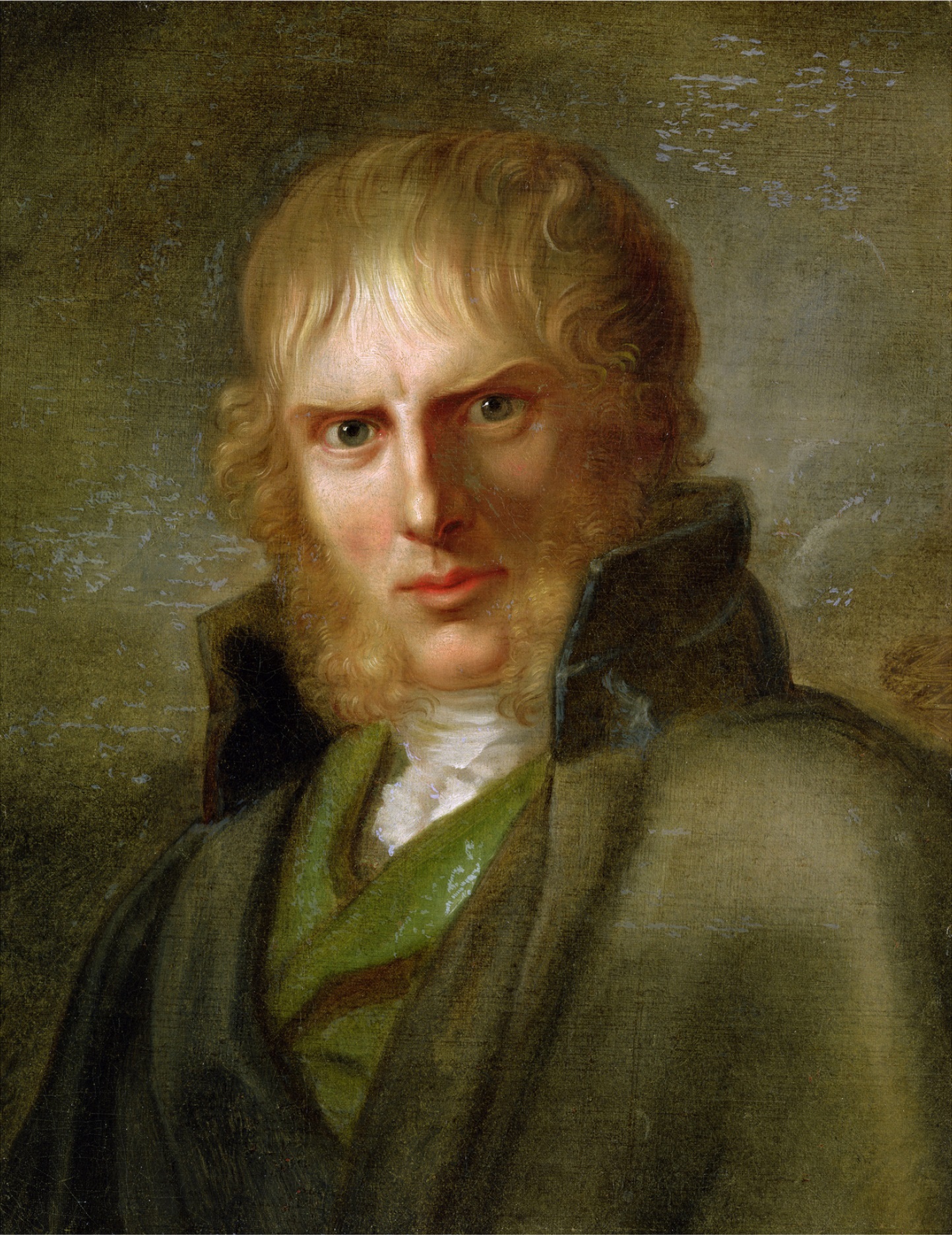
Caspar David Friedrich was the most important German painter and draftsman of the early Romantic period. His compositions are defined by metaphysical transcendence. He forged a new way of depicting nature, often using a Rückenfigur (a figure seen from behind, contemplating the view); he infused his landscapes with religious meaning, including raw, powerful winter scenes unlike anything painted before. It is largely thanks to Friedrich that landscape painting gained its important status in Western art.
P.S. Don't forget that now you can purchase premium quality reproductions of Caspar David Friedrich masterpieces in our DailyArt Shop! :)
P.P.S. Test your knowledge about today's artist with our Caspar David Friedrich QUIZ!