
 Emily Carr
We are delighted to feature this extraordinary painting and the accompanying text today, thanks to the McMichael Canadian Art Collection. The museum is temporarily closed to begin a once-in-a-generation transformation.
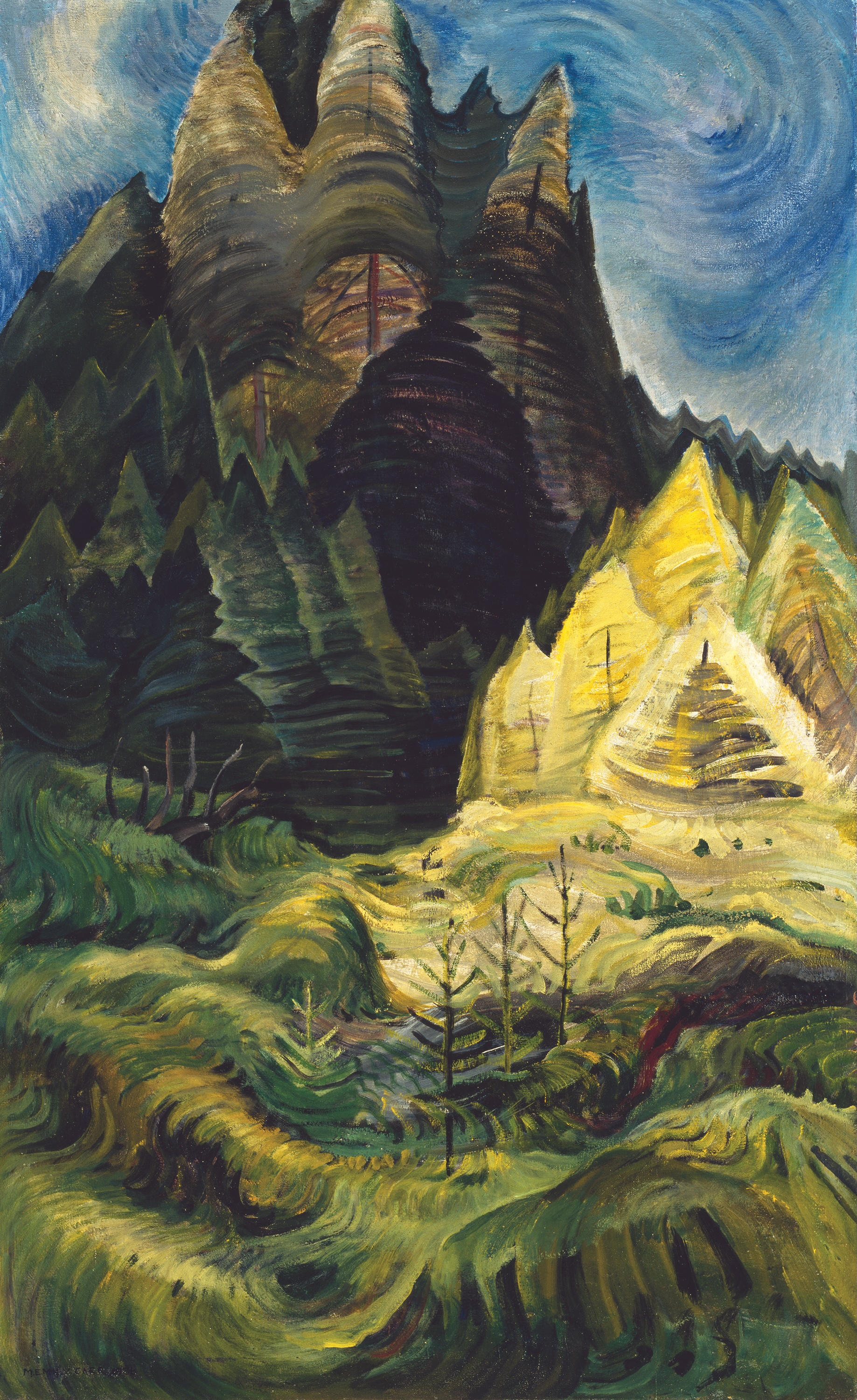
Few artists have felt the natural world as deeply as Emily Carr. Born in Victoria, British Columbia (BC), she spent most of her life on Canada's West Coast, drawing endless inspiration from its towering forests, dramatic skies, and coastal landscapes. By the mid-1930s, Carr had developed a distinctive painting style—thinned oil paint applied in rhythmic, sinuous strokes that seem to breathe with the energy of the forest itself. In Reforestation, young trees push upward through a brush-covered logged clearing, their forms swirling with life and urgency, while their taller, unlogged forebears tower in the background.
Carr witnessed the devastation of deforestation across British Columbia firsthand—and this painting is her response: an image of renewal and resilience, the land asserting itself even after industrial clearing. Carr had turned to landscape painting in the early 1930s, after years of documenting Indigenous villages along the Northwest Coast. What she found in the forest was something almost spiritual: a force that demanded to be felt as much as seen. "Pictures should be inspired by nature," she wrote, "but made in the soul of the artist." Today, Carr is recognized as one of the most original voices in Canadian art history—an artist whose work captured not just the look of the West Coast wilderness, but its living, restless spirit.
P.S. Want even more beautiful art in your life? Our 2027 DailyArt Calendars are seriously gorgeous; they’ll bring a new masterpiece to your everyday routine throughout the year.
P.P.S. Carr’s connection with nature runs through much of her work. Discover more about her art and her love of the natural world.