
 Carleton Watkins
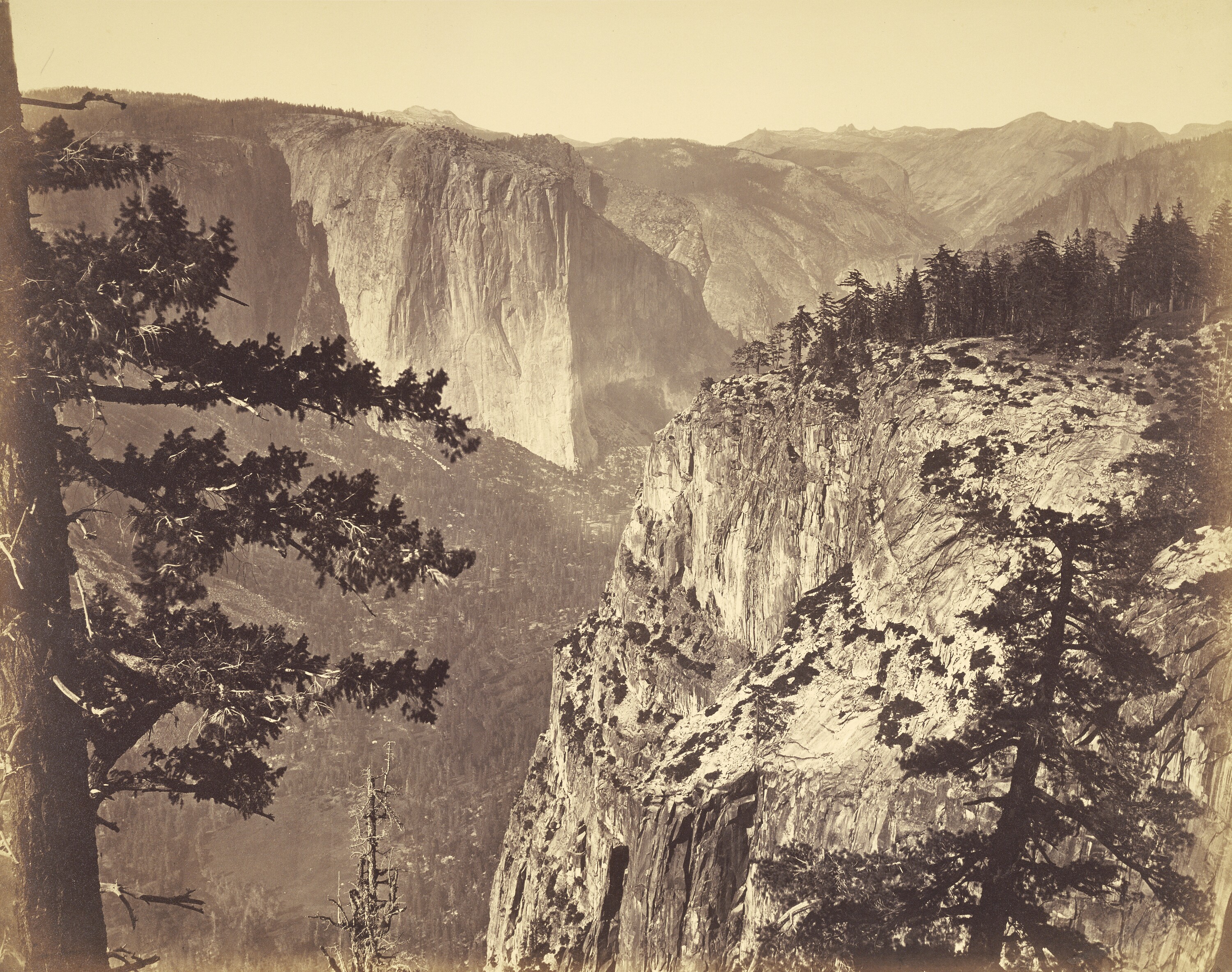
 was one of the great pioneers of American landscape photography, best known for his spectacular 19th-century images of the American West. In the 1860s, he repeatedly photographed Yosemite Valley, transporting cumbersome cameras, glass negatives, and other equipment into terrain that was still extremely difficult to reach. For this view, Watkins positioned his camera at a dizzying height, creating the impression that we are almost suspended in midair above the valley. The dramatic viewpoint recreated something of the overwhelming experience of encountering Yosemite for the first time. Contemporary visitors struggled to describe its scale and beauty; one recalled being left literally breathless by scenery that seemed like “the great work of God.” Watkins's photographs captured precisely this sense of awe, presenting the American wilderness as something monumental, sublime, and almost beyond human comprehension. His Yosemite images also introduced the extraordinary landscape to a much wider public, showing how the relatively young medium of photography could inspire the same sense of wonder traditionally associated with grand landscape painting.
P.S. Some views deserve more than a passing glance. Our DailyArt 2027 Calendars bring beautiful art into your everyday life, giving you something new to stop, look at, and enjoy throughout the year. Check them out in the DailyArt Shop.
P.P.S. Carleton Watkins wasn’t the only artist captivated by the American West. Explore how painters and photographers captured its breathtaking landscapes.