
 John William Waterhouse
In 1916, John William Waterhouse exhibited three paintings at the Royal Academy: A Tale from the Decameron; “I Am Half-Sick of Shadows,” Said the Lady of Shalott; and Miranda—The Tempest. By this late stage of his career, Waterhouse had largely moved away from the classical myths of his earlier paintings toward stories from medieval and Renaissance literature, often focusing on women at moments of revelation, danger, or transformation. During the First World War, this interest in Britain’s literary past also resonated with a broader revival of national subjects, including Arthurian legend and Shakespeare.
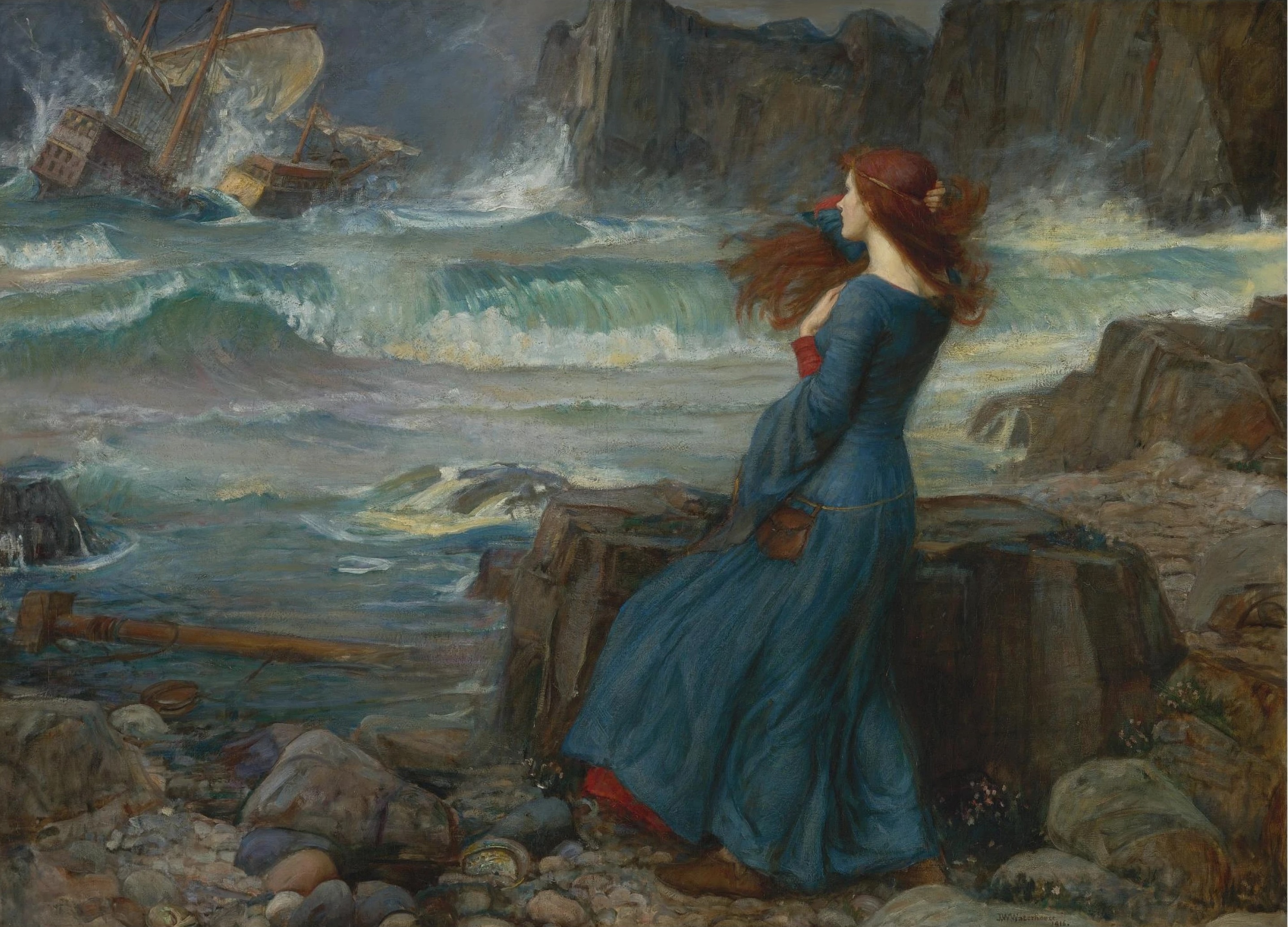
For today's painting, Waterhouse turned to Shakespeare’s The Tempest, written around 1611. The painting captures one of the drama’s most powerful opening moments. Miranda watches helplessly as a violent storm overwhelms a ship carrying, unknown to her, Ferdinand, the man with whom she will fall in love. The tempest has been conjured by her magician father, Prospero, as part of his plan against the men responsible for their exile on the island. Horrified by what she sees, Miranda begs him to stop the destruction, declaring that if she possessed such power herself, she would rather sink the sea into the earth than allow it to swallow the ship.
Waterhouse concentrates all of this drama in Miranda’s body. She braces against the wind as her long auburn hair and heavy dress are violently blown back, one pale hand pressed to her chest. Her face is partly hidden, drawing our attention to her physical reaction to the catastrophe unfolding before her. Around her, bruised blue waves crash against the shore, while fragments of the wrecked ship appear amid the water.
Miranda belongs to Waterhouse’s long line of mysterious literary heroines—women such as the Lady of Shalott, mermaids, and sirens whose stories unfold around magic and desire. Yet Miranda is unusual among them because her story ultimately ends happily. The shipwreck that threatens her future actually brings Ferdinand into her life.
P.S. Ready for Black Friday? It’s on at the DailyArt Shop & Courses! Enjoy 25% off artsy gifts and courses, but don’t wait too long. Some favorites may not be restocked before Christmas, so shop the sale while you can!
P.P.S. Shakespeare’s plays have inspired some unforgettable works of art. See how painters brought his most famous scenes and characters to life on canvas.