
 Unknown Artist
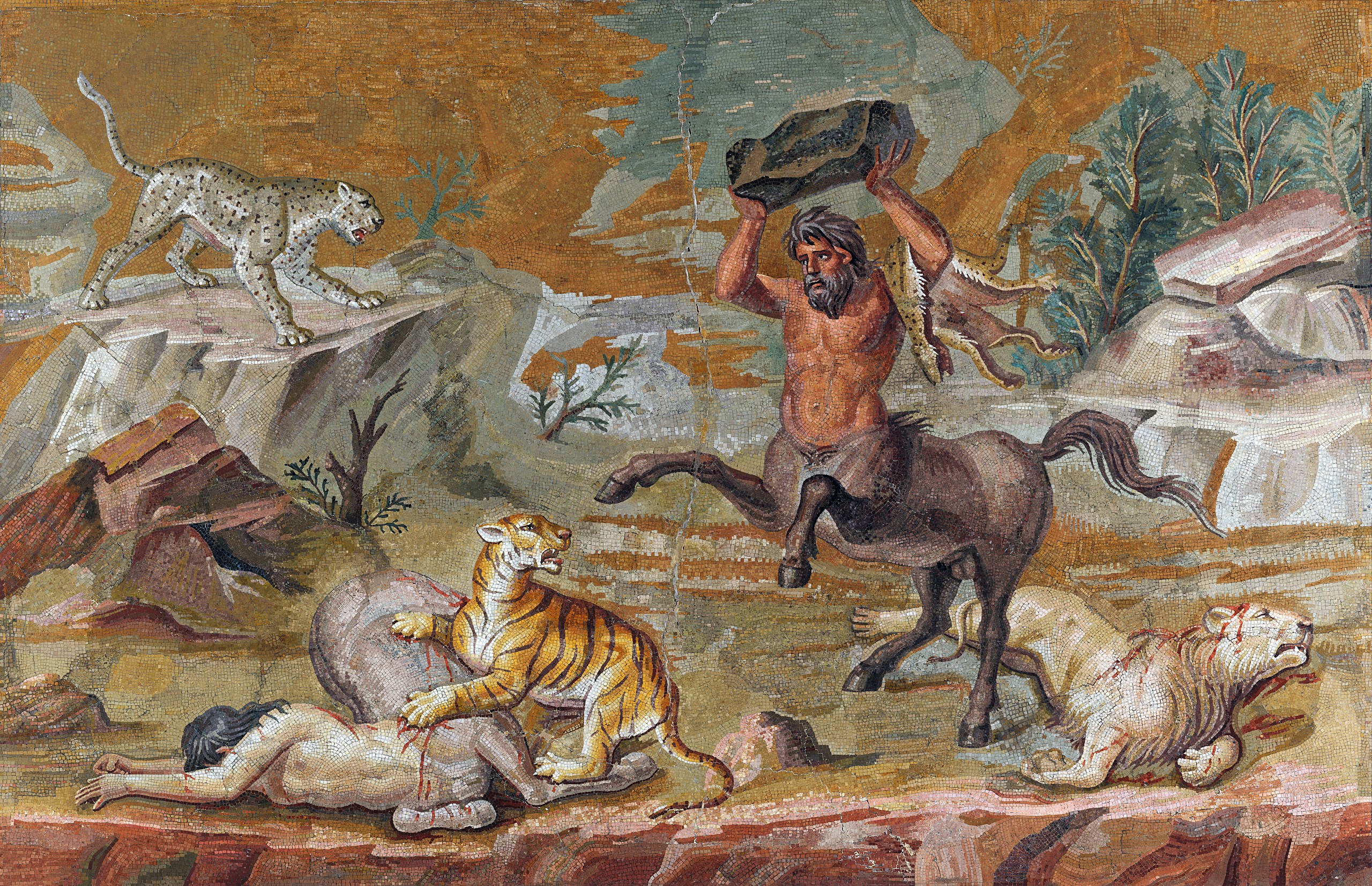
The centaur mosaic was unearthed in the 18th century at the site of Emperor Hadrian’s grand villa complex near Tivoli—a sprawling estate known for its luxury and artistic richness. Discovered in situ, the mosaic was found alongside several smaller ones depicting landscapes, animals, and theatrical masks. This relatively modest central panel, or emblema, once formed part of the elaborate floor decoration in the villa’s main dining room (known as the triclinium).
The mosaic presents a vivid and dramatic scene: a violent clash between mythological centaurs—creatures with the upper body of a human and the lower body of a horse—and ferocious wild cats. Set atop a rugged outcrop that juts over a yawning chasm running along the bottom of the image, a male and female centaur are under attack. The male, rearing up on his hind legs, raises a stone above his head in defense as he charges to aid his fallen companion. The female centaur lies on the ground, pinned by a tiger clawing at her side. Despite the male’s efforts—and the body of a slain lion nearby, bloodied and limp with claws withdrawn—the fight is far from over. In the distance, the rocky landscape recedes with masterful depth, created through layered rock formations and subtle color gradations, and a new threat looms: a leopard poised to leap.
In earlier Greek art, centaurs were often portrayed as wild and beastlike. Over time, however, depictions began to emphasize their human qualities. The 2nd-century writer Lucian, for example, describes the famed painter Zeuxis (active around 400 BCE) as having gained renown for his portrayal of a centaur family in a serene pastoral setting. Similarly, the Roman poet Ovid wrote poignantly of a centaur couple’s tragic fate, casting them in a more sympathetic light.
P.S. Have you heard of Ancient Bikini Girls? Check out this iconic mosaic! And if you're hungry for more, explore the stories in stone and glass: the amazing Roman floor mosaics!
P.P.S. There’s a space where your exhibition, brand, or publication could truly connect with global art lovers. Discover how we can collaborate through DailyArt Magazine.