
 Edward Okuń
In the 1890s, and especially around 1900, there was a noticeable boom in the development of art magazines. Inspired by the era’s concept of Gesamtkunstwerk (a total work of art), these publications sought to unify various art forms such as prose, poetry, graphic design, painting, and music. This gave rise to exceptionally refined journals like the German Jugend or Vienna’s Ver Sacrum, where visual elements were just as important as the written content. The pages of such magazines featured abundant graphic embellishments—vignettes, elaborate initials, ornamental dividers, reproductions of artworks, and of course, original prints.
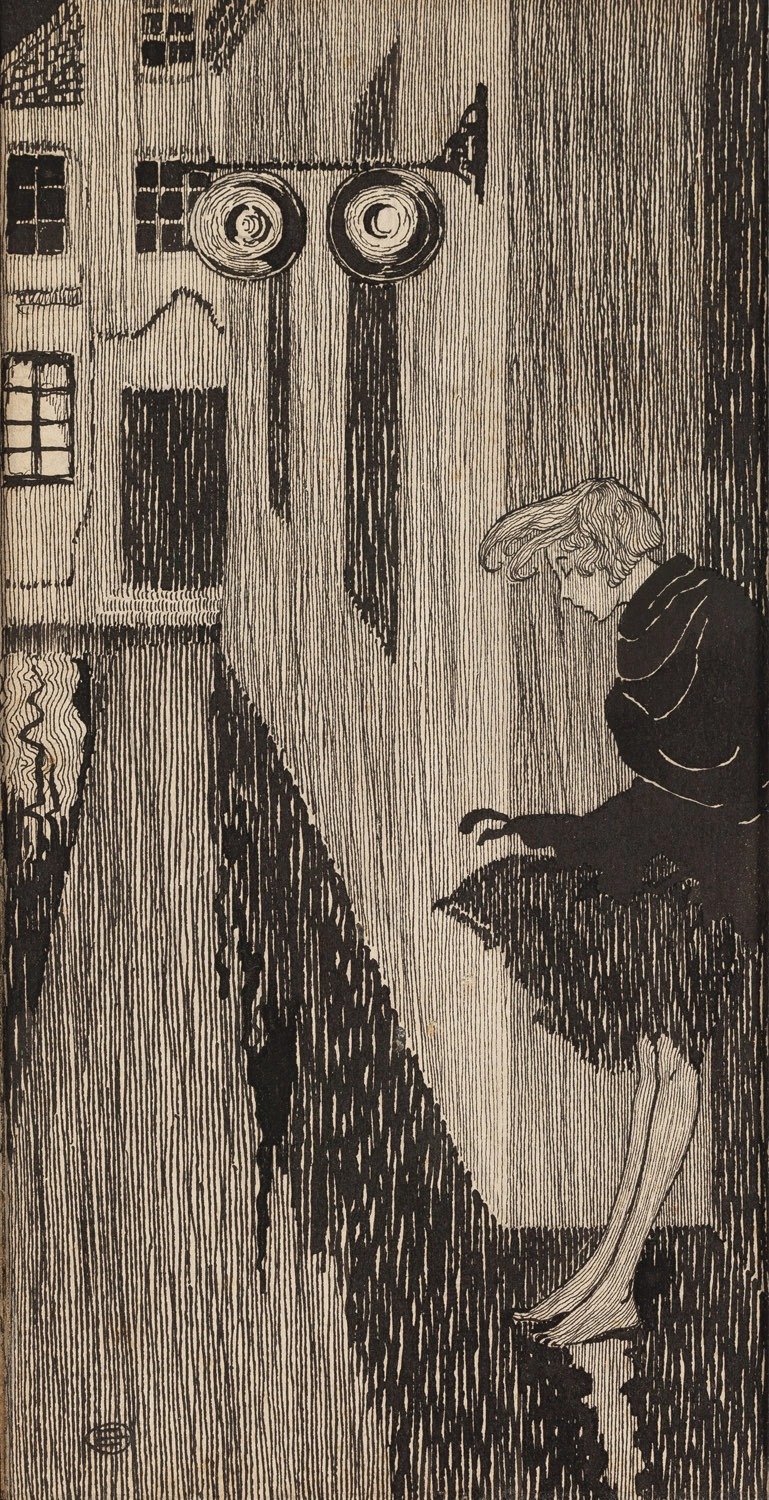
Following this European trend, similar publications began to appear in Poland (DailyArt's homeland). The two most important were Życie (Life), based in Kraków, and Chimera, published in Warsaw. Edward Okuń, an outstanding Polish artist known for his work in both painting and printmaking and associated with the international Art Nouveau movement, was closely linked with Chimera from its inception. His collaboration with the Warsaw periodical included the design of numerous decorative graphics—some of which were never realized in print but were preceded, naturally, by preparatory drawings.
One such drawing may well be the Art Nouveau Street at Night, created for Chimera around 1900. Unfortunately, this design was never published due to technical reasons. Beautiful, isn't it?
P.S. Celebrate Polish artistry in your daily rituals with our Iconic Polish Mug—a little piece of Polish design history.
P.P.S. If you want to explore more Art Nouveau from Central Europe, meet Stanisław Wyspiański—Polish Art Nouveau Genius and check out the remarkable Slavic posters by the Czech artist Alphonse Mucha!