
 Unknown Artist
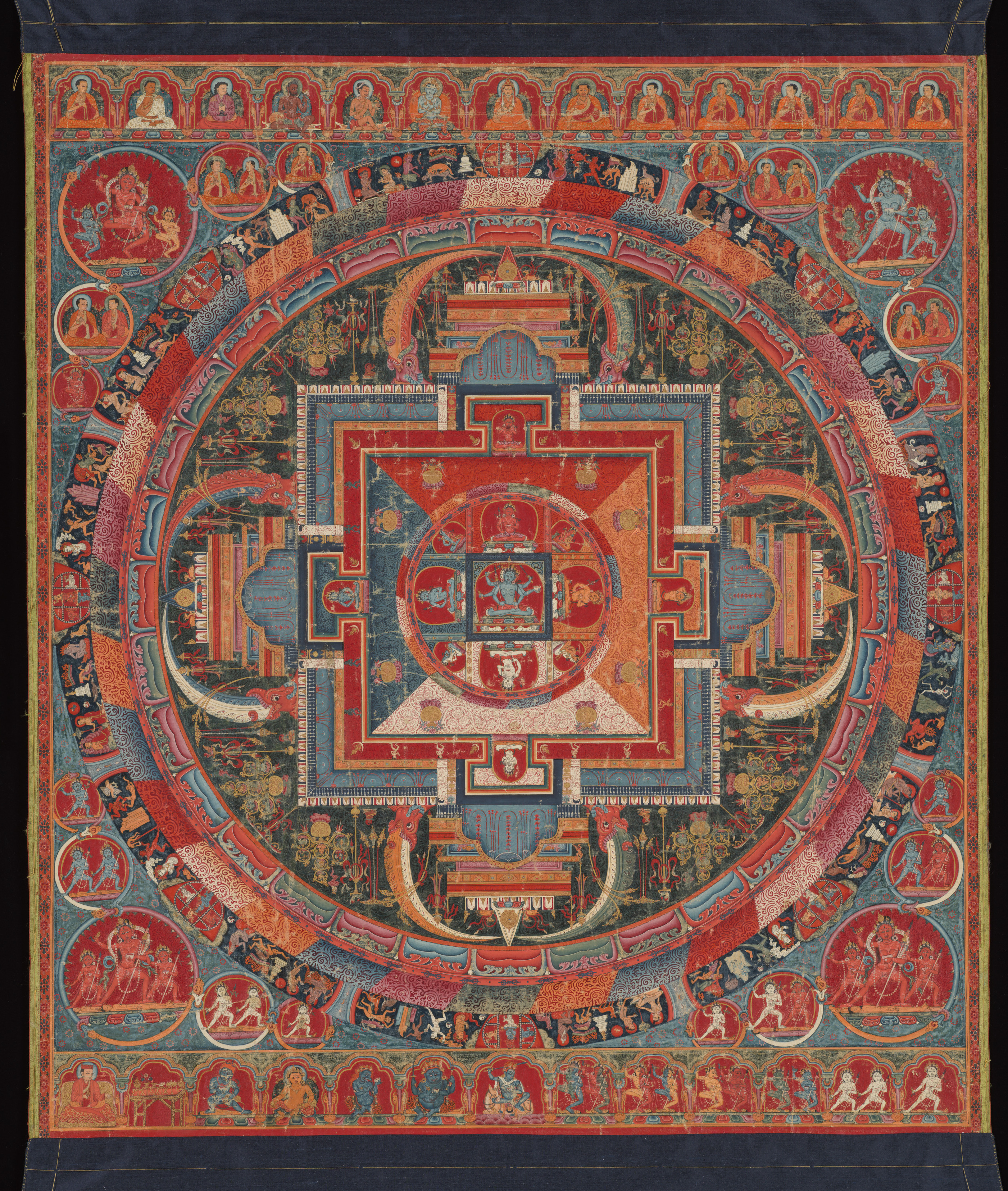
A mandala is a spiritual and ritual symbol in Asian cultures. It can be understood in two ways: externally as a visual representation of the universe or internally as a guide for several practices in many Asian traditions, including meditation.
Let's move to Tibet of the late 14th century. Today we present a thangka, which is a Tibetan Buddhist painting on cotton usually depicting a Buddhist deity, scene, or mandala. Thangkas are traditionally kept unframed and rolled up when not on display, mounted on a textile backing somewhat in the style of Chinese scroll paintings, with a further silk cover on the front.
At the center of this intricate thangka sits the six-armed goddess Jnanadakini, surrounded by eight emanations—forms of the devi (goddesses) that align with the colors of the mandala’s four directional quadrants. Within the gateways, four additional protective goddesses stand guard. Encircling the mandala are concentric bands filled with lotus petals, vajras (scepters), flames, and the eight great charnel grounds. In the corners, roundels contain dakinis (sky dwellers) and lamas (spiritual teachers, priests, or monks), while the upper register features lamas and mahasiddhas (highly accomplished spiritual practitioners) representing the spiritual lineage of the Sakya school (one of four major schools of Tibetan Buddhism). Below, protective deities and a monk engaged in a consecration ritual complete the scene. This thangka likely belonged to a set of 42 mandalas associated with the Vajravali (Garland of Vajras) ritual texts. Its exquisite detail suggests it was painted in Tibet by a traveling Newari artist.
This thangka is a masterpiece of devotion and detail. Explore how sacred art from different cultures has shaped human creativity with our amazing DailyArt 2026 Calendars! As usual, we feature iconic works from across time and tradition. You can order them now on -25% presale. :)
P.S. From its beginnings in India, see how Buddhist art has traveled across cultures.