
 Eugène Jansson
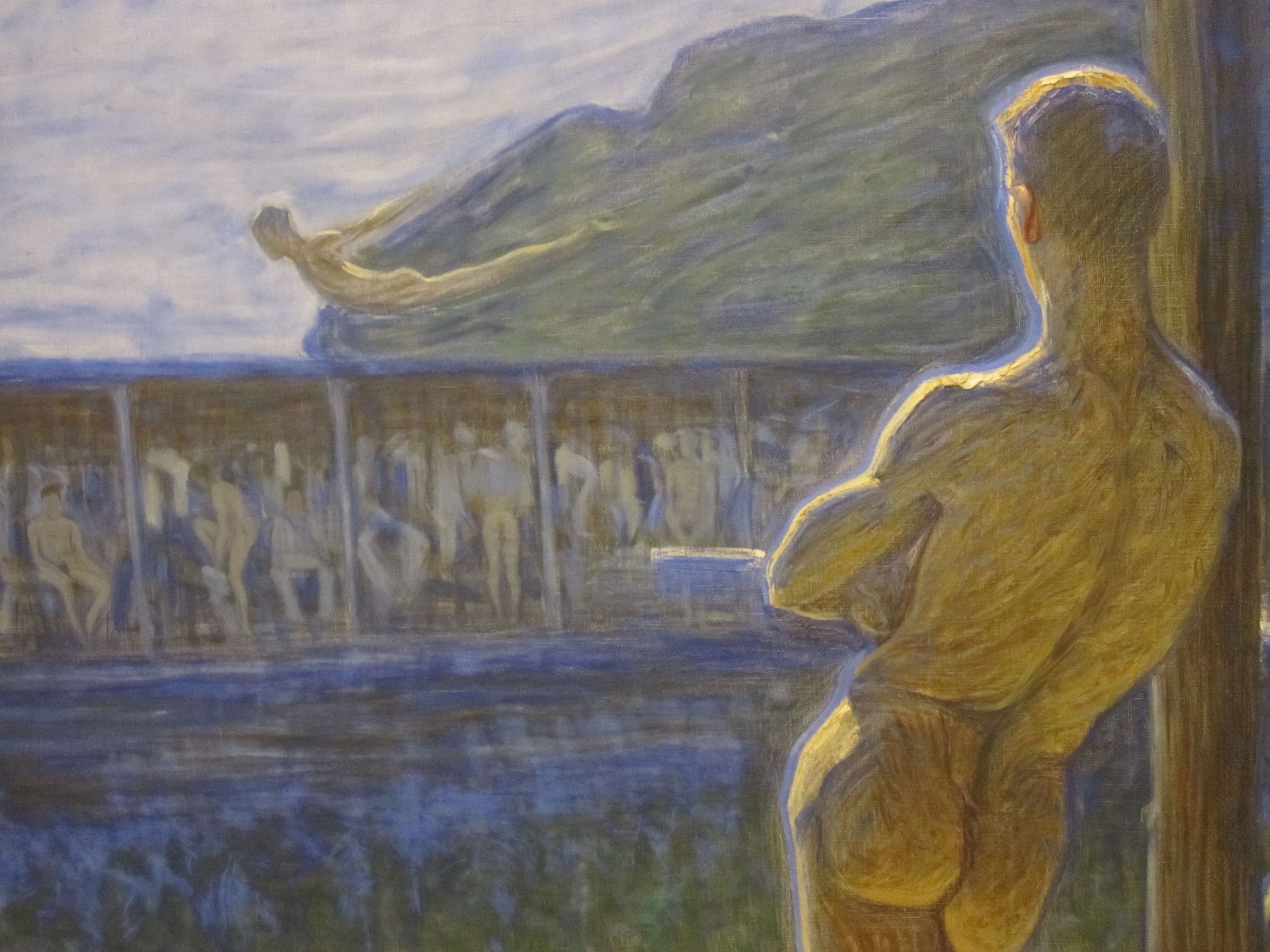
Born in Stockholm, Eugène Jansson spent his entire life in the city he loved. Though he rarely traveled, he emerged as one of Sweden’s most original painters. Despite his relative isolation from the leading innovators of his time, his work reveals connections with broader European art currents.
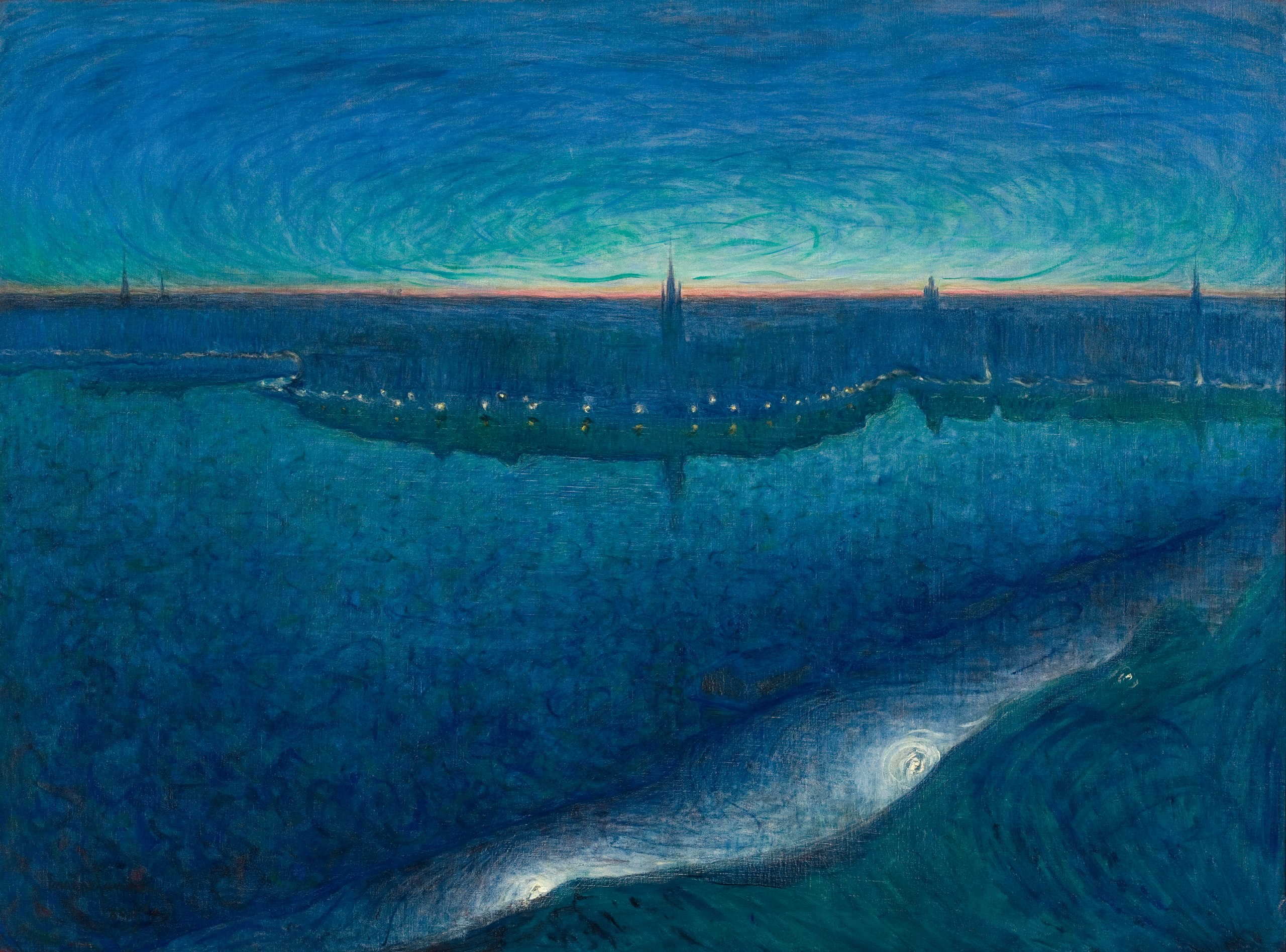
After painting still lifes in his youth to earn a living, Jansson embraced the style that would define an entire phase of his career. He chose a single dominant color—blue—combined with a strikingly personal form of expressionism and a favored subject: panoramic views of Stockholm. From his studio atop Mariaberget, he commanded sweeping vistas of the city’s islands and waterways, which at night seemed to glow with an uncanny blue light. Music, too, was a profound source of inspiration. Friends remarked that the luminous blue tones in his canvases echoed the way he played the piano. Unsurprisingly, he titled several of these nocturnal cityscapes Nocturnes, a tribute to his beloved Chopin.
Critics and the public initially greeted these large, avant-garde works—measuring up to two meters across—with skepticism. Few were purchased. Yet Jansson persisted. Fiercely individualistic, passionate, and uncompromising, he pursued his vision with rigor and discipline. A turning point came in 1898, when he met the wealthy collector Ernest Thiel, who became his patron and secured him financial stability. By 1904, Jansson had completed his last “blue” painting of old Stockholm.
P.S. Dreamy skylines and luminous horizons ... discover more atmospheric views in our Landscapes 50 Postcards Set. :)
P.P.S. Do you enjoy reading stories about art? Subscribe to the DailyArt Magazine newsletter and get them delivered straight to your inbox!