
 Carleton Watkins
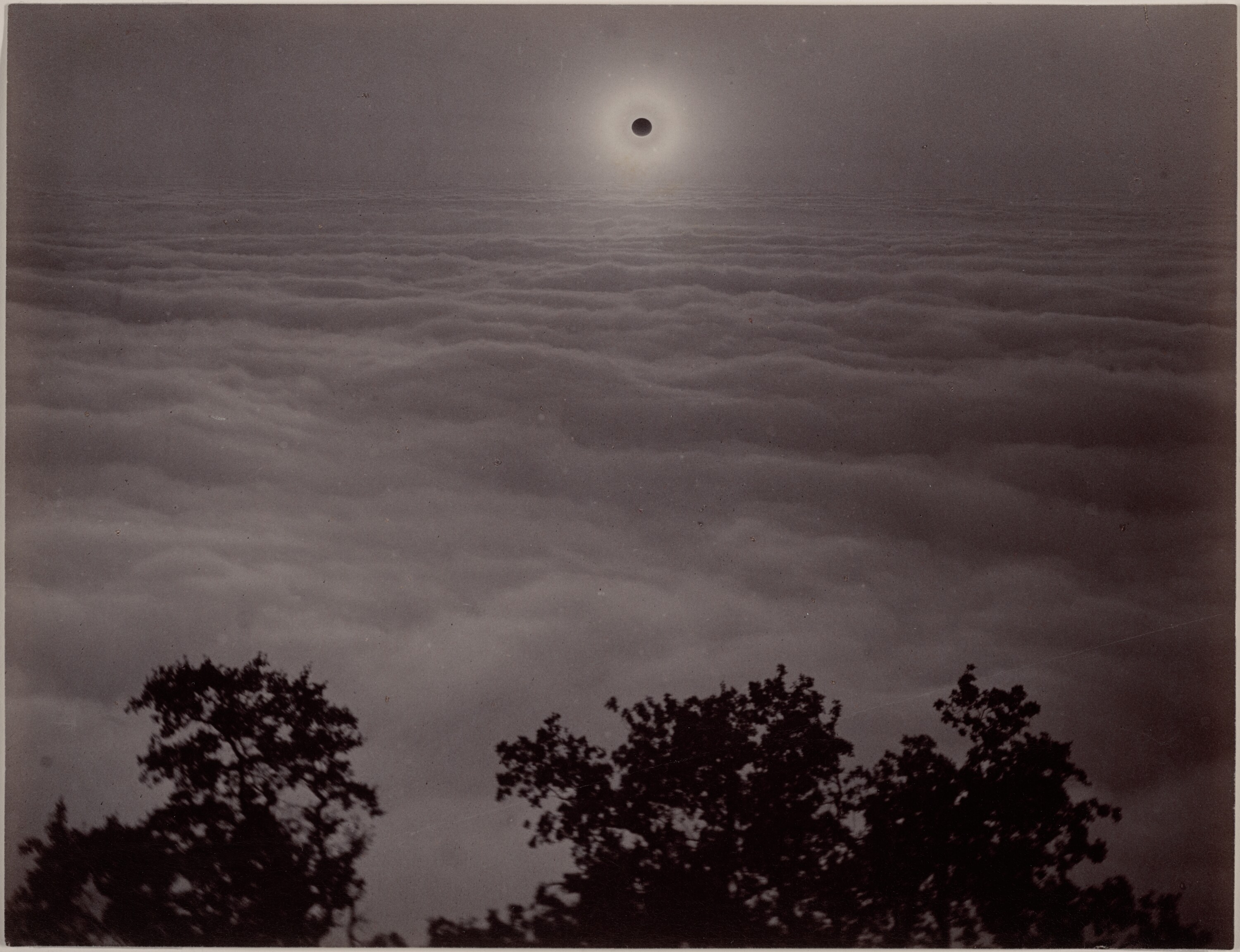
At approximately 2:34 p.m. on January 11, 1880, Carleton Watkins, the official photographer for the California State Geological Survey, stood atop Mount Santa Lucia in northern California and captured a single exposure during the brief moment of totality. Accompanied by professors from the newly established University of California and the United States Naval Observatory, Watkins waited for more than an hour as the moon slowly moved into position directly before the sun. In the resulting image, the eclipsed sun hangs above a vast sea of clouds whose undulating forms fill the sky. Only the treetops in the foreground anchor the scene to the earthly landscape.
Today, you can see the solar eclipse yourself; it will pass over the Arctic Ocean, Greenland, Iceland, the Atlantic Ocean, Portugal, and northern Spain. If you are not in these places, we hope you enjoyed the photograph from 1880!
P.S. Celestial phenomena have fascinated artists since the very beginning of art. Discover the spectacular solar eclipse painting from Venice!
P.P.S. Make art part of your daily search! Add DailyArt Magazine as a preferred source on Google and let great art find you.