
 Mariusz Hermanowicz
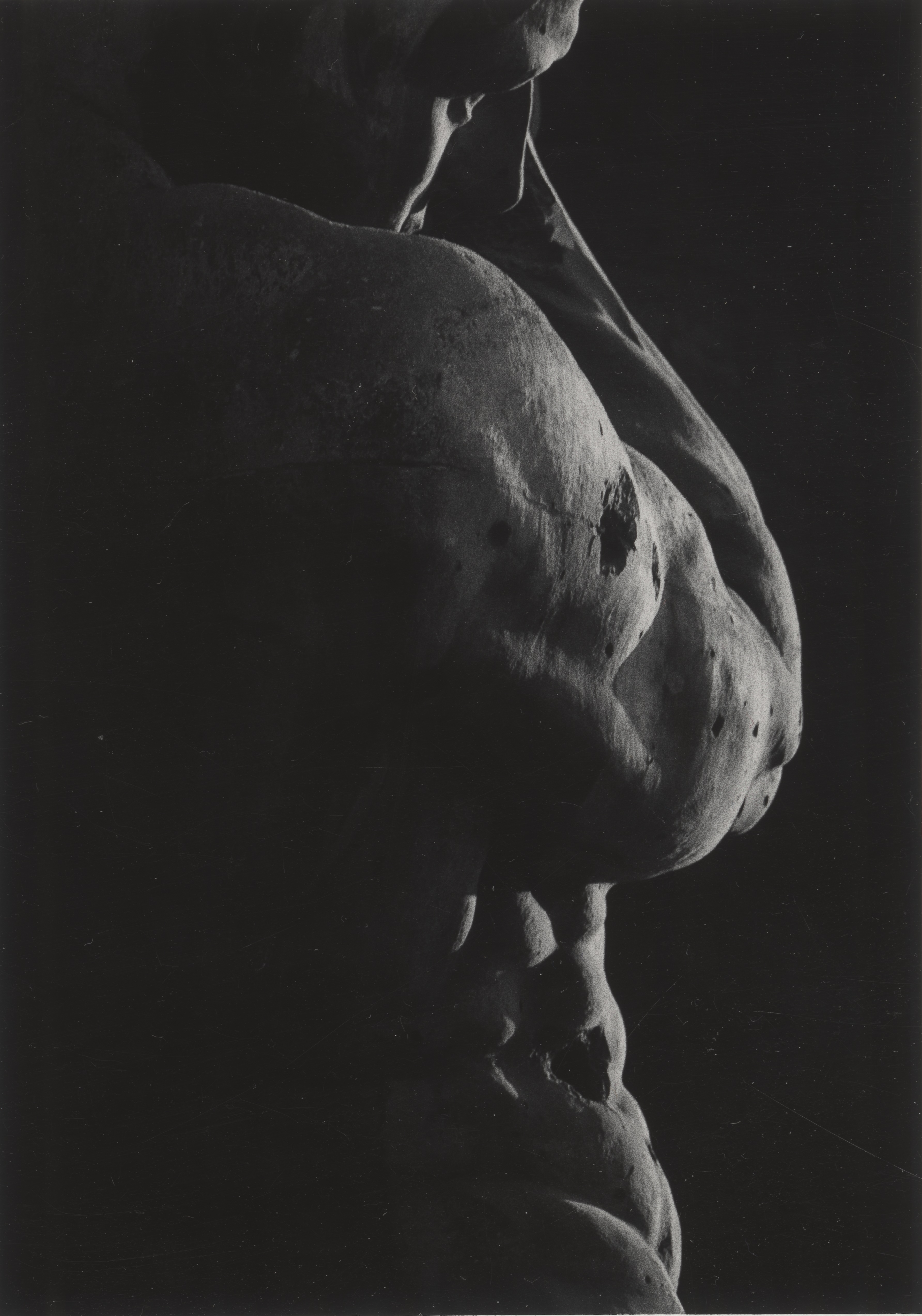
At first glance, the image appears to be a classic studio photograph of a sculpture. The black background cleanly isolates the form: the stone object seems removed from any specific setting, as if displayed in a museum. Only after a moment does something begin to unsettle us. In this photograph from the series Traces by the Polish conceptual artist Mariusz Hermanowicz, striking details come into view—cracks, losses, small holes scattered across the stone surface. These flaws are not decorative texture, nor are they simply the result of time’s natural passage. They resemble wounds, scars left by bullets. From this derives the title of the entire series: Traces.
Hermanowicz documented wartime destruction in Warsaw dating from the Second World War, yet he deliberately avoided literal representation in addressing this difficult subject. Rather than wide views of ruins, he focused on fragments of reality—sections of walls, details of sculptures. Here he chose a stone surface which, seen in close-up, begins to evoke human skin. The artist demonstrates that photography need not depict the human body directly in order to speak about suffering and transience.
The image is a subtle record of wartime violence: the stone stands in for the fabric of the city, and its “skin” bears the marks of history.
P.S. Discover more rare archival photographs at the Virtual Photography Museum of the Archeology of Photography Foundation.
P.P.S. Curious about how artists have shown the beauty of the human body in art? Check our our Nudes in Art 50 Postcards Set. ;)
P.P.P.S. One of the most famous photographers documenting the Second World War was actually an American working for ... Vogue magazine. Explore the war's attrocities through the Surrealist lens of Lee Miller!