
 Unknown Artist
Time for a lot of gold!
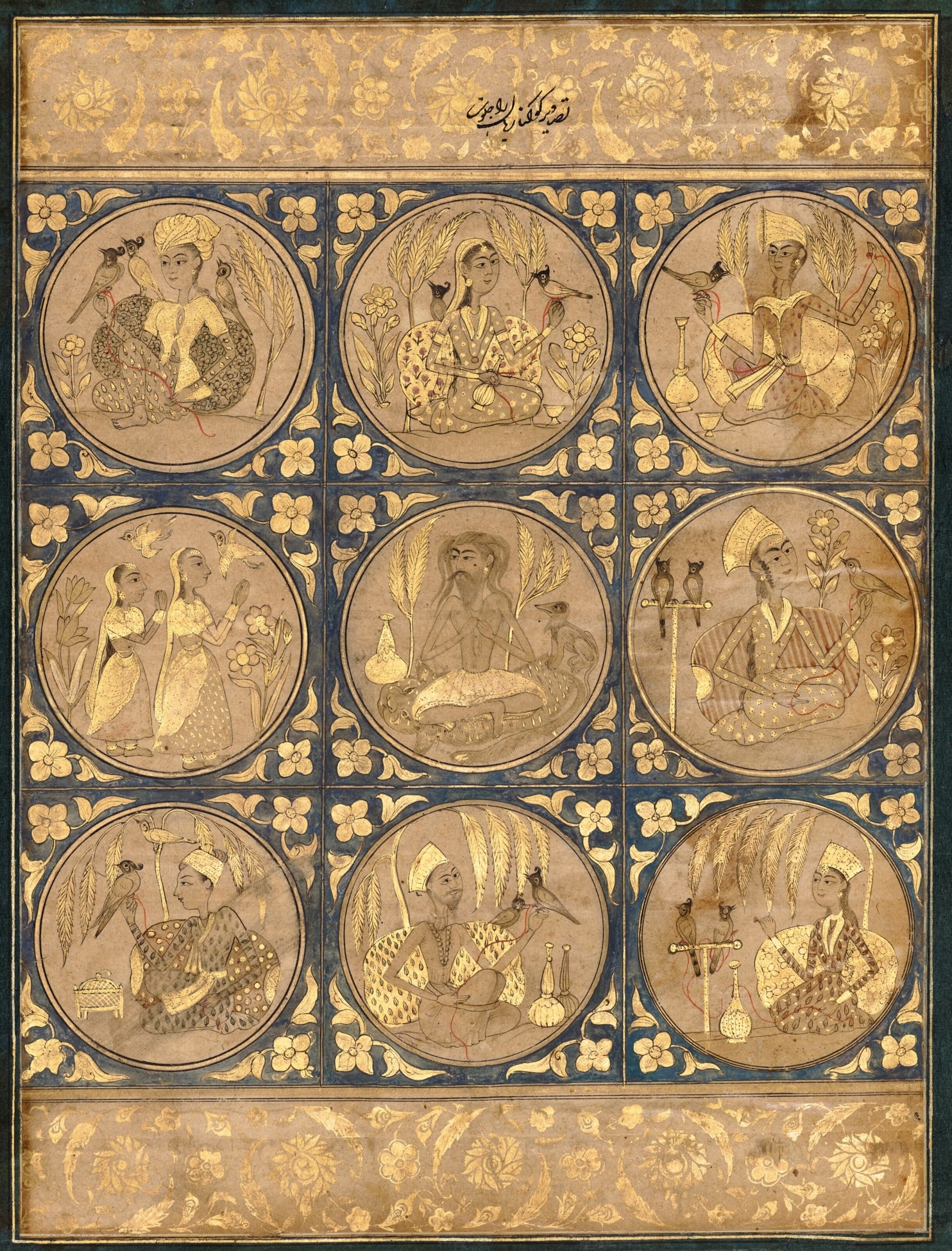
This is a folio from an Indian manuscript. Each of the nine gold roundels presents a figure accompanied by a pet—either a parrot or a small lapdog. Richly illuminated with gold, the portraits are otherwise nearly monochrome, with the only touch of color being the red threads that tether the birds to their owners. Parrots appear frequently in Indian literature, and their presence here may allude to their symbolic role in storytelling and cultural tradition.
An inscription above the roundels reads “tasawir-i kuknariyan-i rajput(?)”, which can be translated as “Representations of poppy-headed Rajputs(?)”. The phrase “poppy-headed” may carry a special meaning: it could refer to the exaggerated proportions of the figures’ heads, or suggest opium use. This interpretation is reinforced by the presence of huqqas (a traditional water pipe) in many of the portraits, hinting that the figures may be engaged in opium smoking.
The roundel format itself recalls hand-painted ganjifa playing cards, which often featured circular designs with small figures or animals rendered in gold and limited color. The floral motifs and the focus on one or two figures closely resemble examples known from similar works.
It is a strange folio, but you must admit, very beautiful!
P.S. Let's continue with some intricate art from the Mughal Empire! Discover jali—the most delicate stone curtains!
P.P.S. These carefully rendered parrots and lapdogs are part of a broader artistic fascination with animals as symbols, companions, and storytellers—featured in our Animals in Art 50 Postcards Set.