
 Katarzyna Kobro
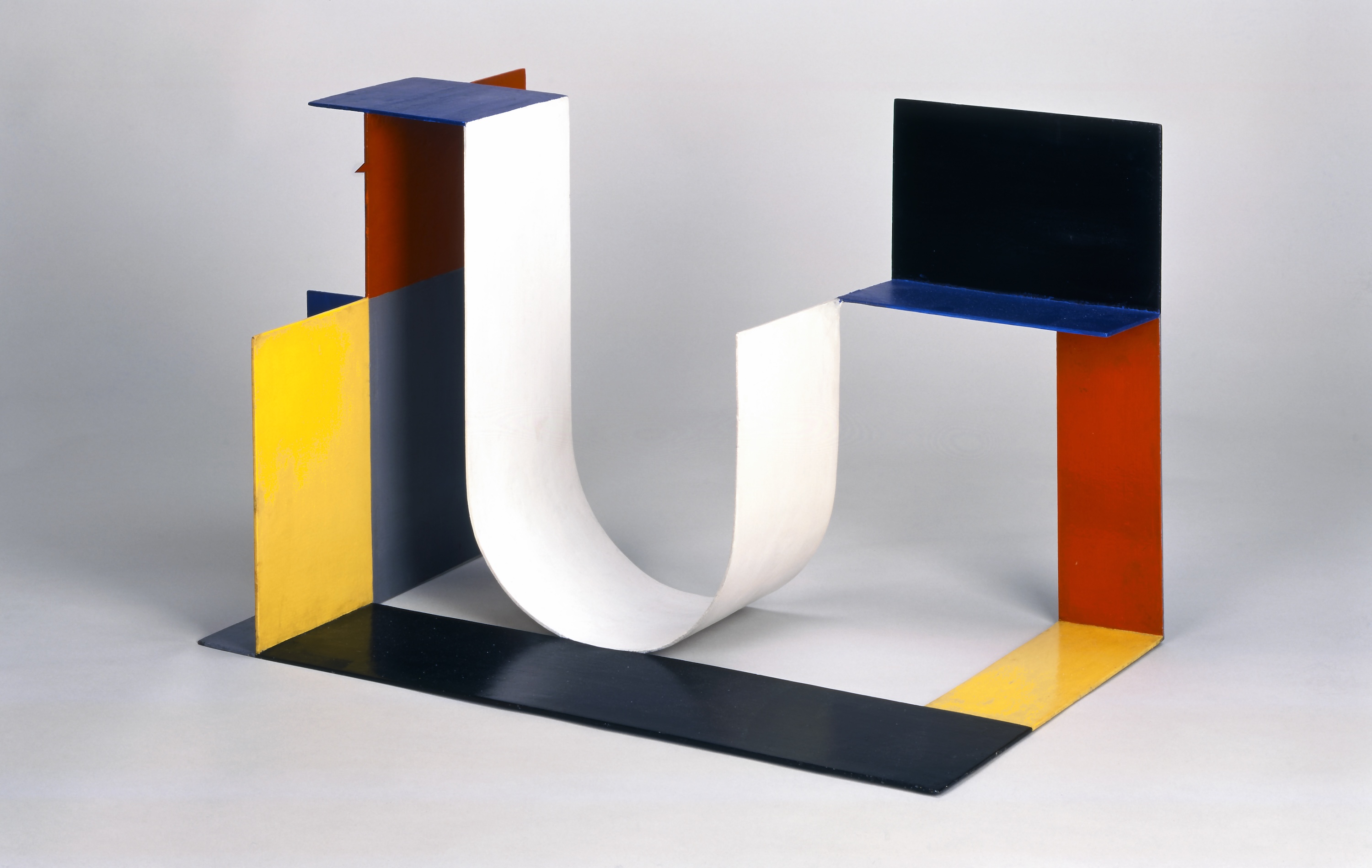
Katarzyna Kobro was a sculptor and art theorist, and one of the most progressive and outstanding artists associated with the interwar avant-garde in Poland. Under the influence of Constructivism, she rejected the concepts of aestheticism, individualism, and subjectivism; she instead postulated the absolute objectivism of form. Her main aim was to build an abstract work of art, based on universal and objective rules discovered through experimentation and spatial analysis. Her sculptural work is considered one of the most significant achievements of avant-garde art; related to the work of Kazimir Malevich and Georges Vantongerloo, it presents an original reflection on the logic of composing space, which may also have had implications for architecture.
She left behind a relatively small body of work in terms of quantity, but one of great artistic significance. After her death, part of it had to be reconstructed to fully appreciate the innovativeness and boldness of her ideas. Some works—mainly the earliest ones—have been lost and are known only through photographic or documentary records. The small number of her surviving works is mostly held in the Museum of Art in Łódź, and we are presenting today's work thanks to this amazing museum.
In a text on the concept of spatiality in contemporary sculpture published in 1929 (Europa, no. 2), Katarzyna Kobro wrote, “… Sculpture is nothing but shaping of form in space...is part of its ambient space- ...A sculpture enters space, and space enters it in turn...As it becomes united with space, the new sculpture should be its most condensed and essential part.” According to Kobro, sculpture, like architecture, should be subject to an appropriate system of construction and to a universal rule of composition. Thus, it would be closer to the vision of architecture of the future. Compositions of lines, planes, and Neo-Plastic colors formed a new reality based on the rules of art—rules governing the unity of rhythms, dimensions, and divisions. Organization of space was to derive from sculpture, but it would also organize other areas of life and reality itself.
P.S. Kobro believed that abstraction could reshape not only sculpture, but the experience of space itself. A similar visionary approach can be found in Group X, Altarpiece No. 1 by Hilma af Klint, now available as a museum-quality fine art print.
P.P.S. Can you recognize these women sculptors? Test yourself in our quiz!