
 Helen McNicoll
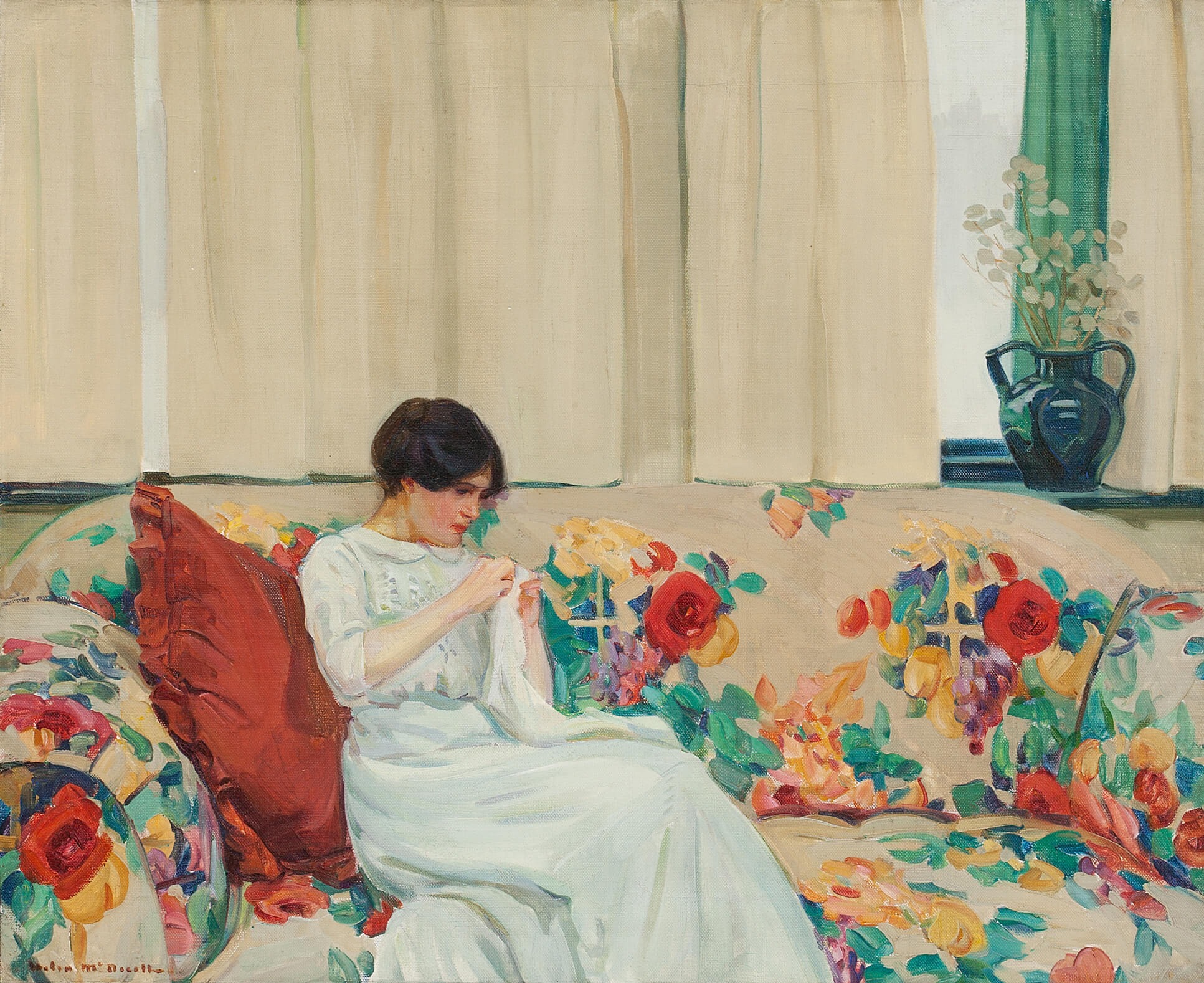
The Chintz Sofa depicts the London studio shared by the Canadian Impressionist painter Helen McNicoll and her partner, the British painter Dorothea Sharp, who is depicted in the work. At first glance, the scene suggests quiet domesticity. Yet some art historians have proposed a more charged reading: the figure may represent a suffragette making memorabilia for the women’s rights movement. Painted in 1913, at the height of militant suffrage protests, the work coincided with McNicoll’s election to the Royal Society of British Artists (RBA).
Women’s access to artistic institutions was still fraught. Even as members of the RBA, they often faced marginalization and turned instead to groups like the Society of Women Artists (SWA), where Sharp served as vice-president. Though neither artist’s political stance is fully documented, their deep involvement in women’s organizations suggests that The Chintz Sofa resonates with feminist struggles beyond the studio.
The studio itself—a spacious flat at 91 Ashworth Mansions, Maida Vale—was both workplace and social hub. McNicoll’s space hosted exhibitions and networking events. In a 1913 letter, she reported that 57 visitors, including RBA members, attended a studio show staged just before the society’s annual elections. With Sharp actively promoting her partner, McNicoll secured membership—and a photograph of the studio appeared alongside coverage of her success in the Montreal Daily Star.
P.S. Want to explore more art by remarkable women? Start with our Women Artists 50 Postcards Set.
P.P.S. From the US and Canada, across Europe, all the way to Japan, meet 10 women Impressionists you should know!