
 Unknown Artist
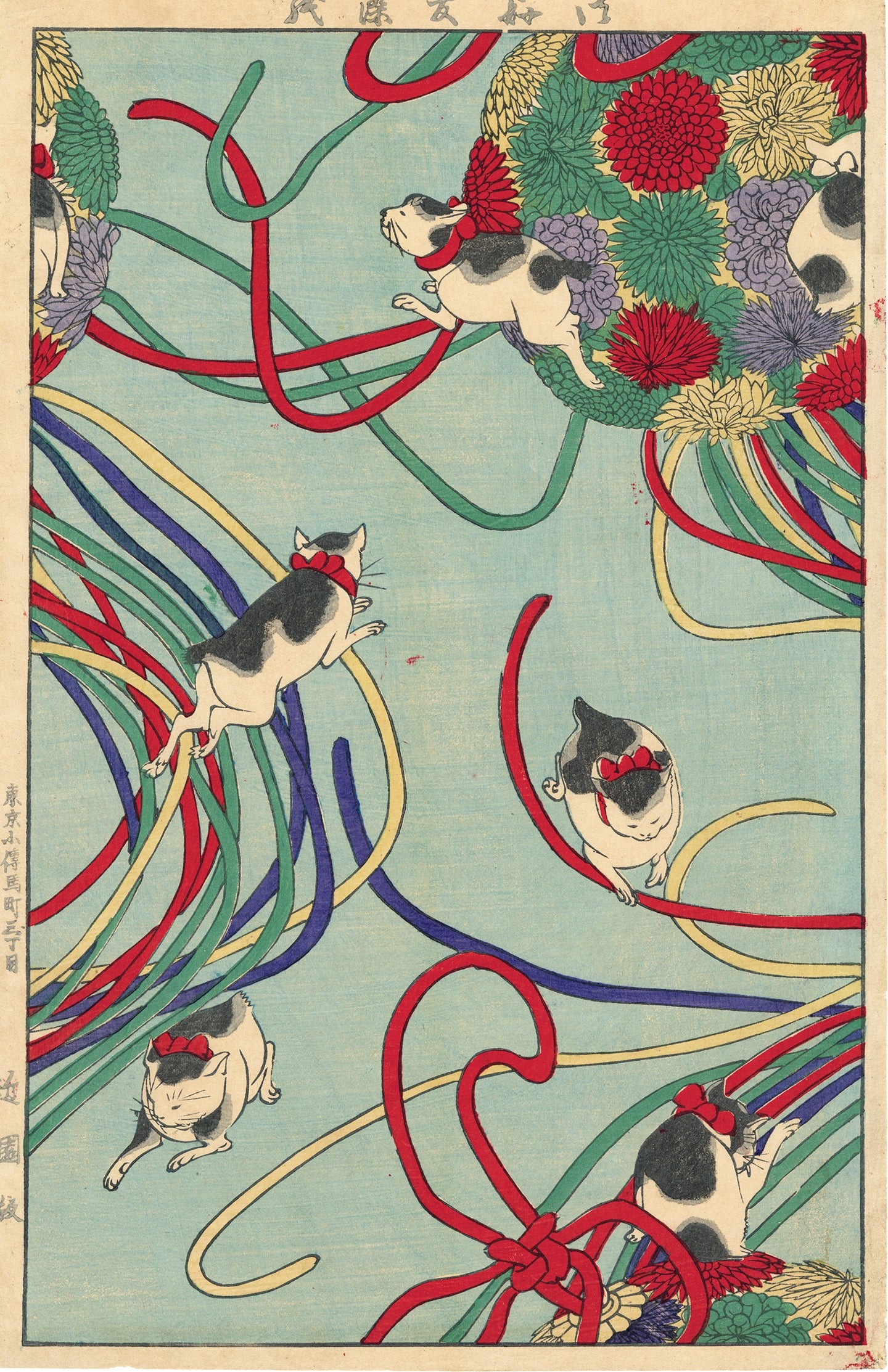
This charming repeating pattern of cats, chrysanthemums, and ribbons is an example of yūzen-gami—decorated design paper created as a model for kimono makers. Such sheets served as pattern guides, allowing craftsmen to transfer and adapt designs onto textiles using the *yūzen-zome resist-dyeing technique, which had been used to embellish kimonos since the 17th century.
During the Edo period, yūzen dyeing was an exceptionally labor-intensive process, making these richly decorated garments affordable only to the wealthiest members of society. Following the Meiji Restoration, however, many painters whose traditional styles had fallen out of favor found new opportunities in the textile industry. Their involvement brought renewed vitality to kimono design, introducing greater naturalism and artistic sophistication while preserving established decorative traditions.
Unfortunately, we don't know who created this beautiful design, but for sure it is conceived as a seamless repeat. When printed edge-to-edge, the playful cats and floral motifs continue uninterrupted across the surface, creating a lively decorative pattern that could extend indefinitely in every direction.
P.S. Cats, cranes, koi fish, tigers, monkeys—animals have played a fascinating role in Japanese art for centuries, often carrying symbolic meanings and appearing in everything from woodblock prints to painted screens. If you'd like to explore this rich tradition, be sure to check out our new Animals in Japanese Art postcard collection!
P.P.S. Here's a bit more about cats in Japanese art!